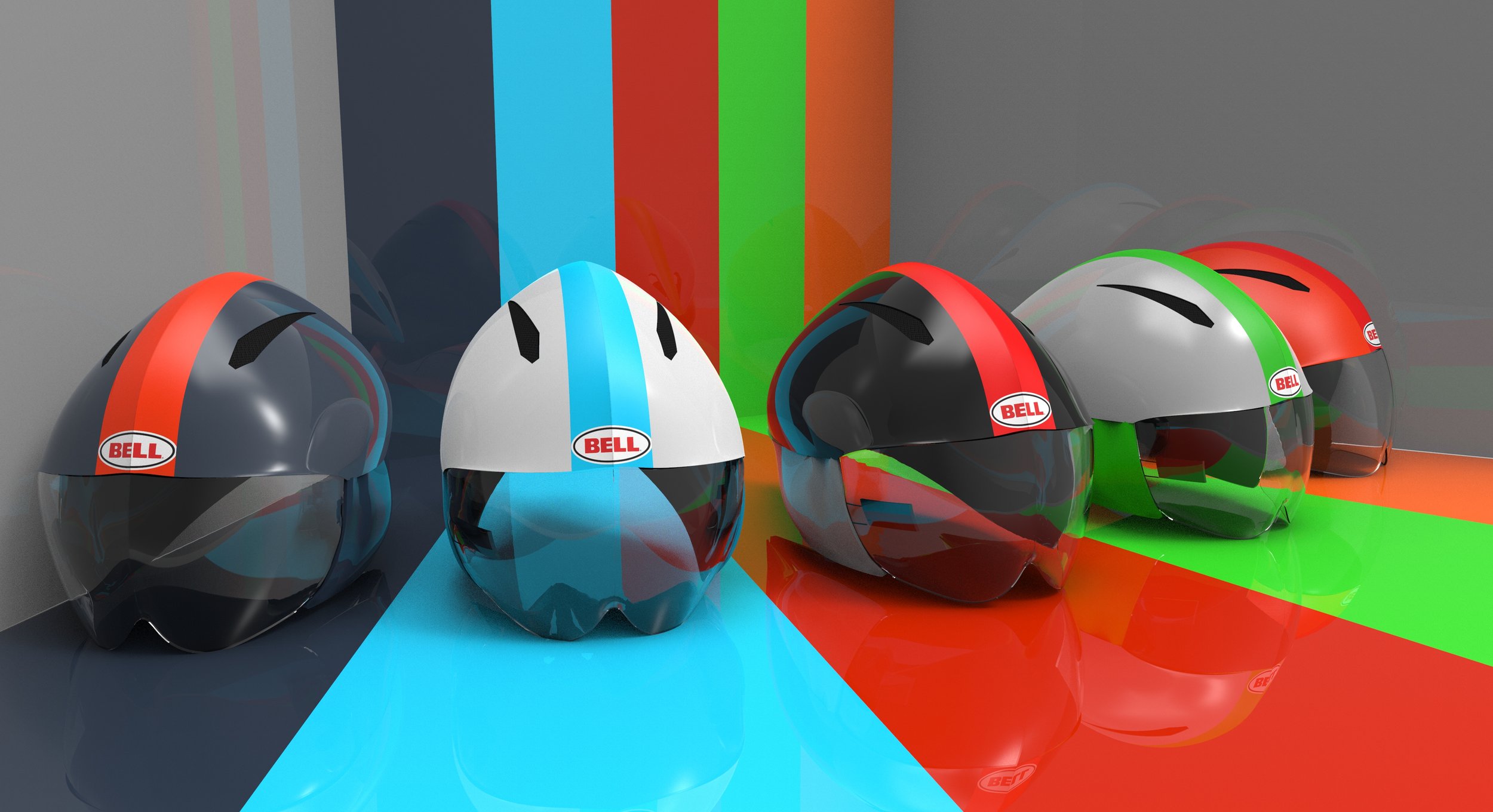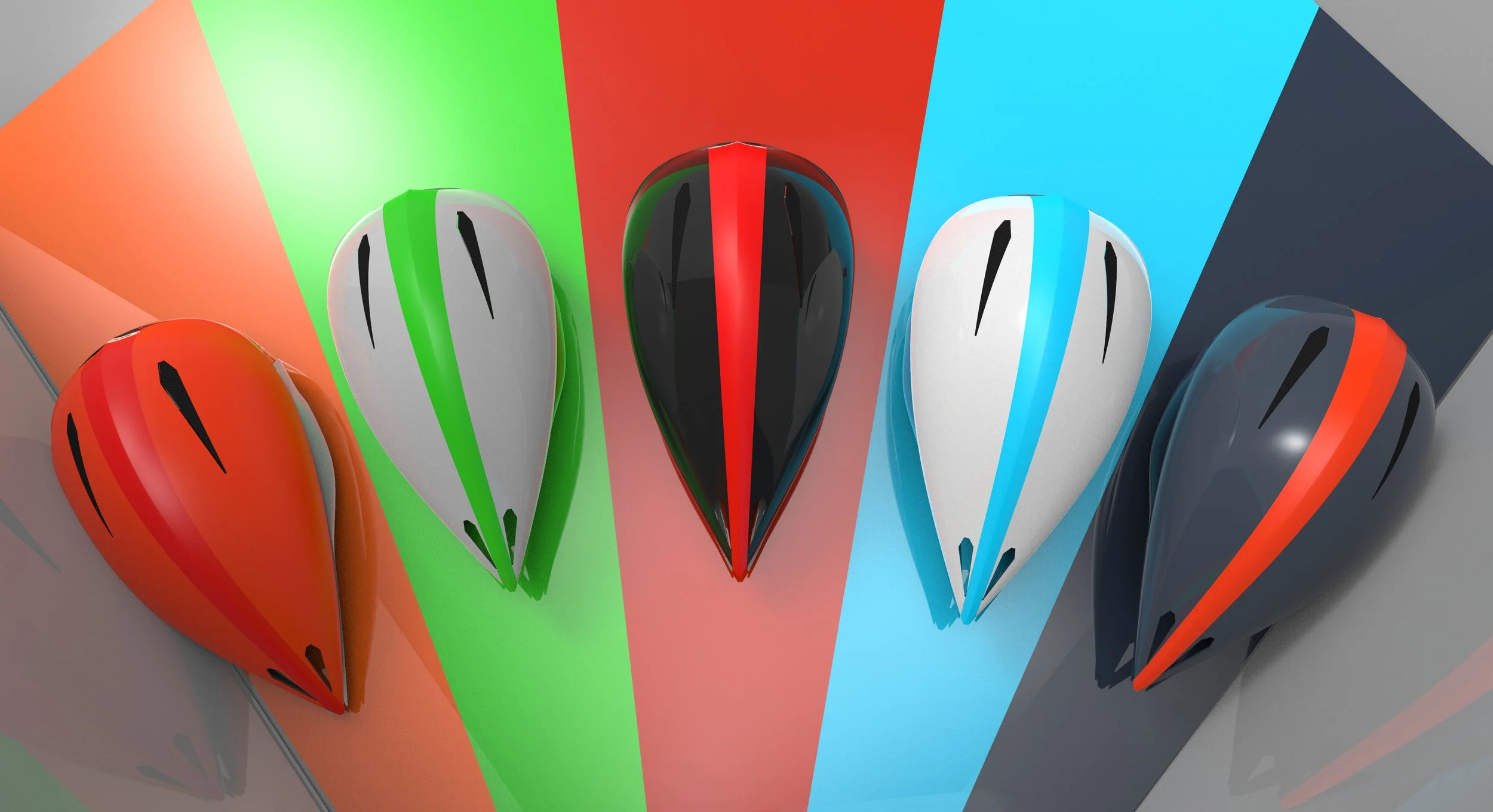
Bell Javalin - Reworked
Heads up display -
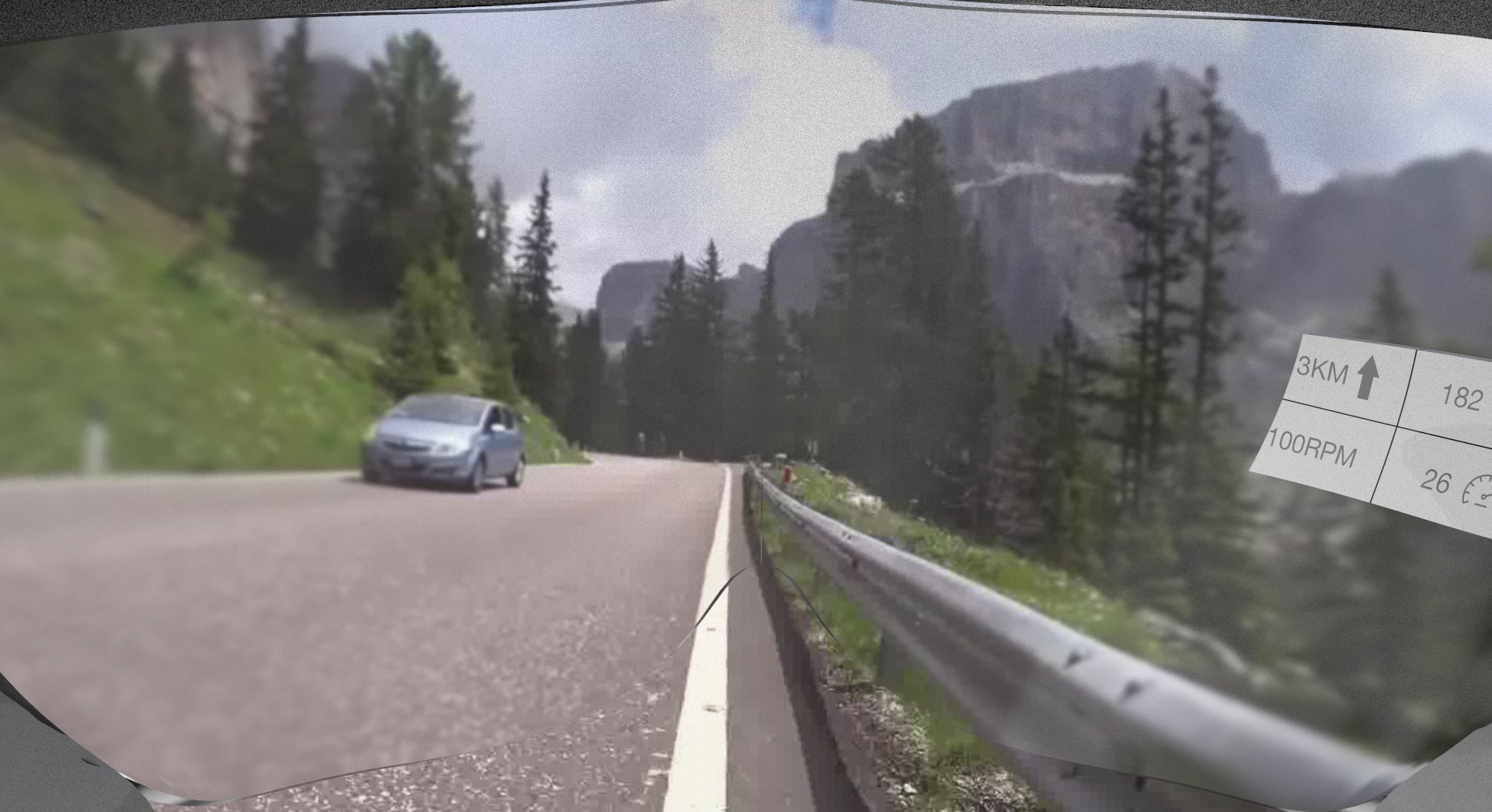
Looking down to see ride data is vital in time-trial conditions. Throughout an event, you must keep track of power targets, heart rate and speed to ensure a perfect run. It also pose’s a large safety risk as your eyes leave the road and you lose situational awareness, especially when most time-trials in the UK are done on open roads.
By bringing the data within the helmet by using a Bluetooth heads up display linked to a cycling computer, it is all available without your eyes leaving the road, enabling the rider to avoid the next on course obstacle.
Adaptive Aerodynamics
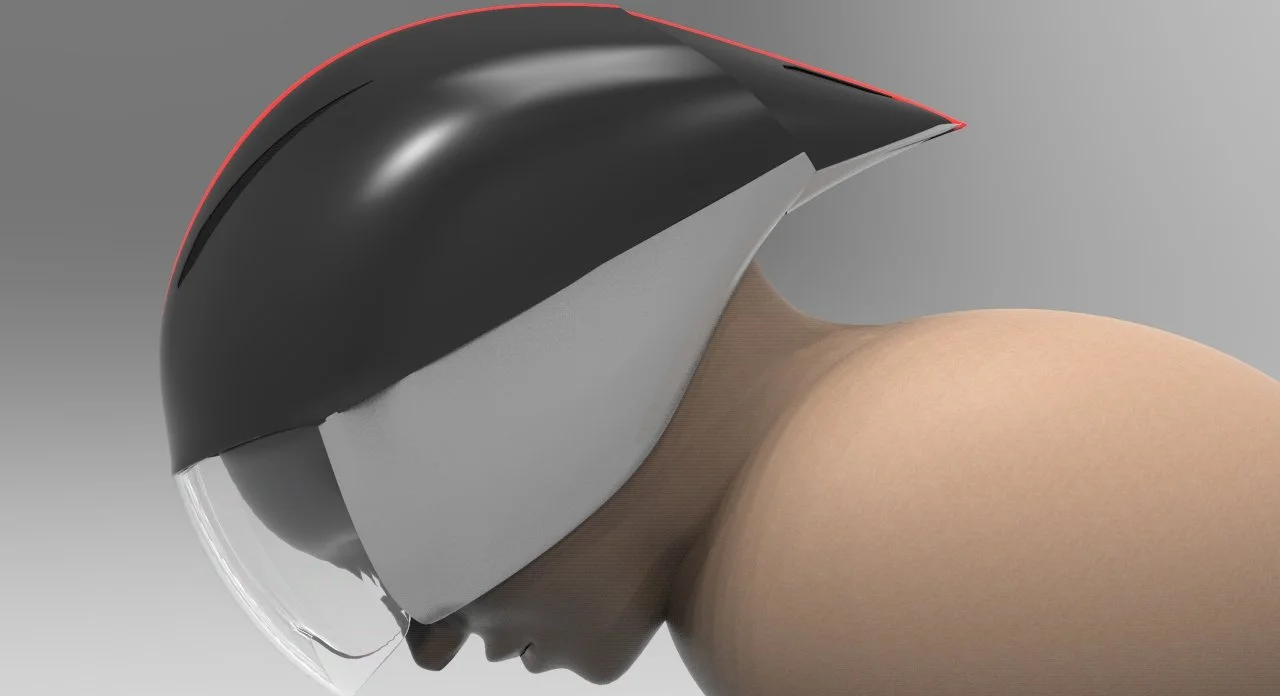
As your legs build with lactic and your heart-rate rises, riders head often start to dip. This is known as Stem watching.
The aerodynamics of a time-trial helmet are vastly more efficient than a regular helmet. But only if the tip of the helmet runs down the center of the riders back. On a fixed device, if the head drops the aerodynamic gains become a wind sail, creating an unclean section of air flowing down the back of the rider, greatly increasing drag.
The revised concept using a simple counterbalance to drop the fin as the head faces down. It acts without any need for calibration or input control, aiding the rider to maintain clean air down their backs, ensuring aerodynamic optimization.
Safety First -
Technological integration in a helmet must not come over the prioritisation of rider safety. A helmet in its basic form is to protect the head in the unfortunate case of an impact or crash.
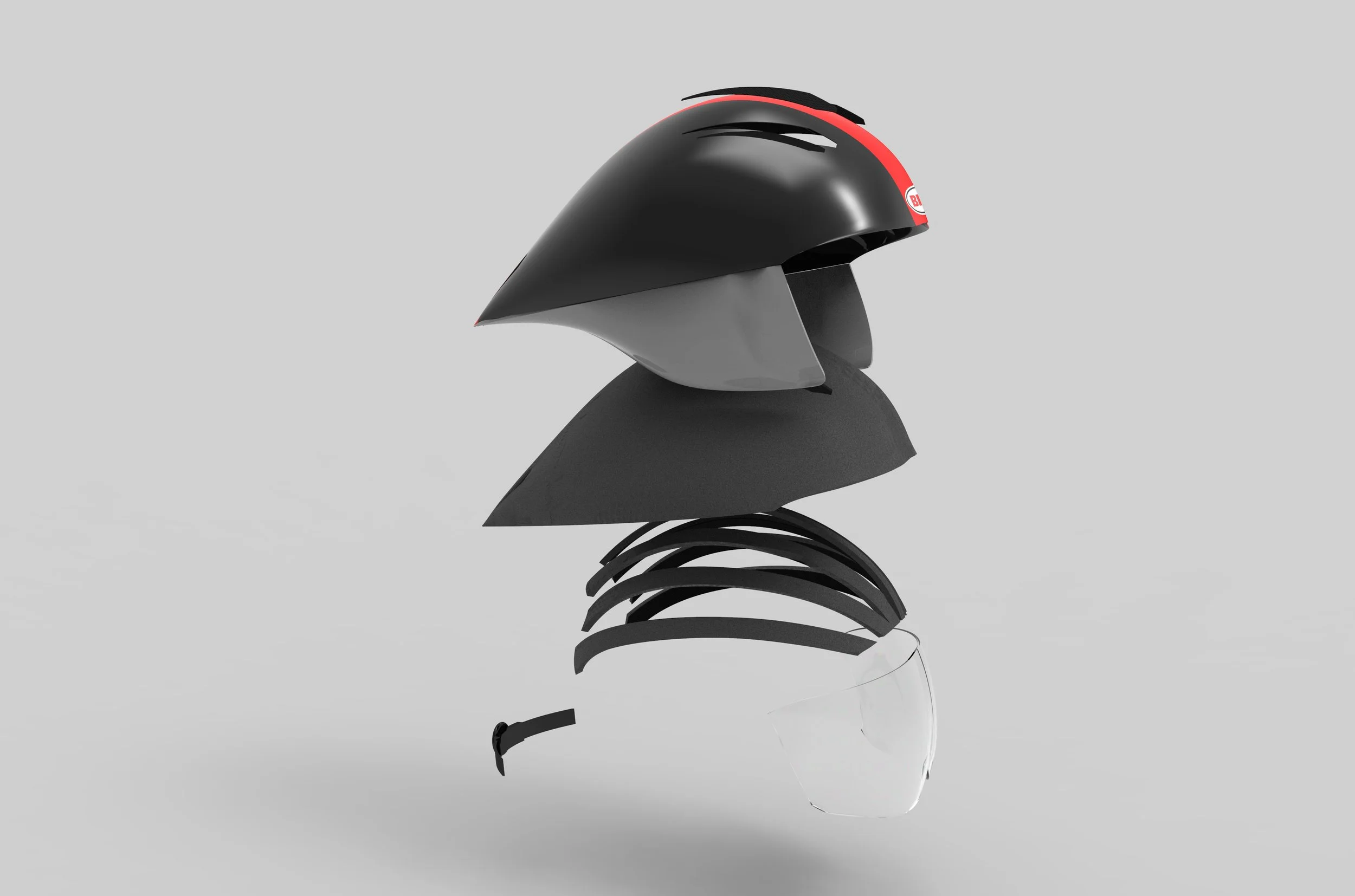
Te revised concept features a multi-layer buildup of a hard poly-carbonate shell, with a shock reducing molded polystyrene liner. To then increase comfort antibacterial hot spot releasing liner system is mounted using hook and loop with an adjustable dial for a personalised finely tuned fit.